free estimates: (402) 690-1050
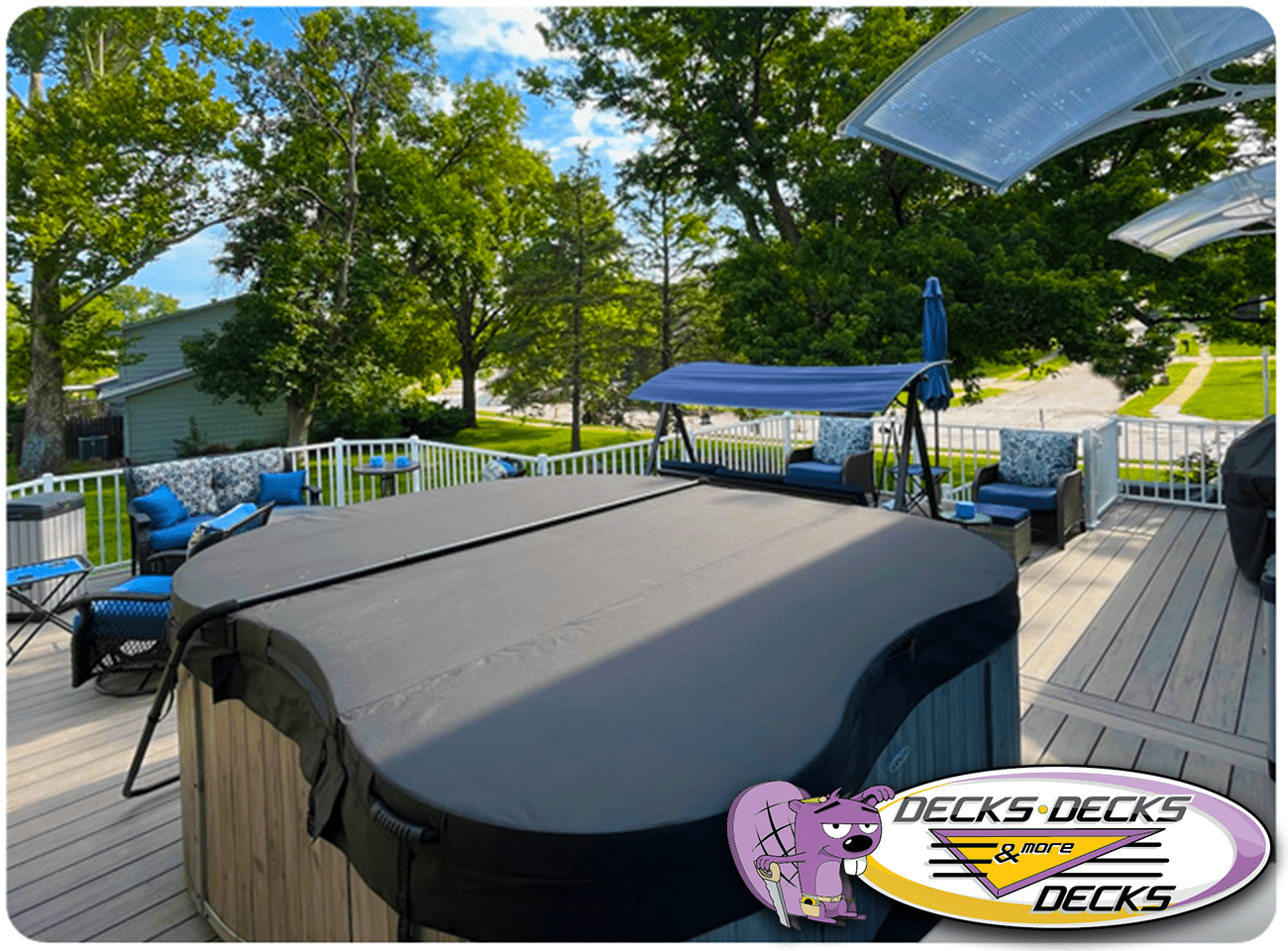
Hot Tubs on Composite Decks: Winter-Ready Framing & Electrical Basics
A hot tub on your deck sounds amazing — especially in the middle of a Nebraska winter. But before filling it up and soaking under the stars, your deck needs the right structure, materials, and electrical setup to handle the extra weight and cold conditions.
At Decks, Decks & More Decks, we’ve built dozens of composite hot tub decks across Omaha, Papillion, and Bellevue. Here’s how we make sure they’re strong, safe, and ready for year-round relaxation.
Step 1: Structural Framing for a Hot Tub Deck
A typical hot tub can weigh anywhere from 3,000 to 6,000 pounds when filled with water and people. That’s the equivalent of parking a small SUV on your deck.
To handle that kind of load, we build:
-
Double or triple 2×10 joists beneath the tub area
-
Closer joist spacing (10”–12” on center) instead of standard 16”
-
Extra concrete footings or helical piers for even weight distribution
-
Cross-bracing to resist lateral movement during use
We also work with local engineers or follow city permit requirements to ensure your deck meets or exceeds Omaha’s snow and live-load codes.
Step 2: Ideal Deck Materials for Hot Tub Installs
Hot tubs add heat, moisture, and water splashing — conditions that destroy wood decks over time.
That’s why we exclusively recommend composite or PVC decking for spa installations.
Top choices for durability include:
-
TimberTech Azek®: 100% PVC with top-tier moisture resistance.
-
Trex Transcend®: Composite core with a tough protective shell.
-
Deckorators Voyage®: Superior traction, even when wet.
Composite decking doesn’t warp or splinter, so you can step barefoot from hot tub to deck without worry — even in freezing temperatures.
Step 3: Electrical & Safety Requirements
Hot tubs require dedicated electrical circuits, typically 220–240 volts with a GFCI breaker.
Here’s what to keep in mind:
-
Electrical work must be done by a licensed electrician.
-
GFCI breakers protect you from shocks caused by water exposure.
-
Outlets and connections must be weather-rated and sealed.
-
Wiring should run through conduit beneath the deck to prevent moisture damage.
We coordinate with certified electricians to ensure your hot tub’s power system meets Papillion and Omaha electrical codes — fully protected and winter-proof.
Step 4: Drainage and Winterization
Even a small amount of water buildup beneath a hot tub can cause structural issues in winter.
We design every hot tub deck with:
✅ Proper slope and drainage away from the tub base
✅ Moisture barriers between framing and decking
✅ Access panels for maintenance and electrical work
In colder months, covering your spa with a thermal lid and maintaining proper water chemistry helps prevent freeze damage — and keeps your energy bills lower.
Step 5: Design Integration & Privacy
A hot tub should enhance your outdoor space, not look like an afterthought.
We help design layouts that blend seamlessly with your composite deck:
-
Sunken hot tubs for easier entry
-
Privacy screens or pergolas for shelter and seclusion
-
LED perimeter lighting for nighttime relaxation
The result is a clean, cohesive look that’s both functional and beautiful year-round.
Build Your Winter-Ready Hot Tub Deck
Whether you’re installing a new hot tub or upgrading an existing deck to support one, Decks, Decks & More Decks can make it happen safely and efficiently.
Our team designs every deck to handle Nebraska’s freeze-thaw climate, ensuring decades of strength and comfort.
Call (402) 690-1050 or visit our Papillion showroom to get started on your composite hot tub deck today.