free estimates: (402) 690-1050
Snow Load Myths: What Nebraska Codes Actually Require for Decks
Every winter, Nebraska homeowners ask the same question: “Can my deck handle all this snow?”
The short answer — maybe.
The long answer depends on your deck’s design, age, materials, and local building codes.
At Decks, Decks & More Decks, we’ve rebuilt countless decks around Omaha and Papillion that didn’t meet proper snow load standards. Let’s clear up some common myths and explain what Nebraska codes actually require.
Myth #1: All Decks Are Built for Heavy Snow
Not true. Older decks, especially those built before 2012, were often designed under lighter code standards or without professional engineering.
Today, most areas in eastern Nebraska — including Omaha, Bellevue, and Gretna — follow a 40 pounds per square foot (PSF) live load requirement for decks. That means every square foot of deck surface must safely support 40 pounds of weight from snow, people, or furniture.
However, some municipalities increase this to 50 PSF for elevated decks or decks with roofs, hot tubs, or heavy snow exposure.
What it means for you:
If your deck is more than 10 years old, it might not meet current code for load capacity.
Myth #2: Composite Decks Can Hold More Weight
Composite decking like Trex®, TimberTech®, or Deckorators® is stronger than wood in many ways — but it doesn’t automatically increase structural load capacity.
The frame beneath the decking determines how much weight your deck can handle. The boards themselves are surface materials, not structural beams.
We design all composite decks with pressure-treated joists and engineered supports rated for modern Nebraska snow load codes — ensuring both performance and compliance.
Myth #3: It’s Safe to Leave Deep Snow on Your Deck
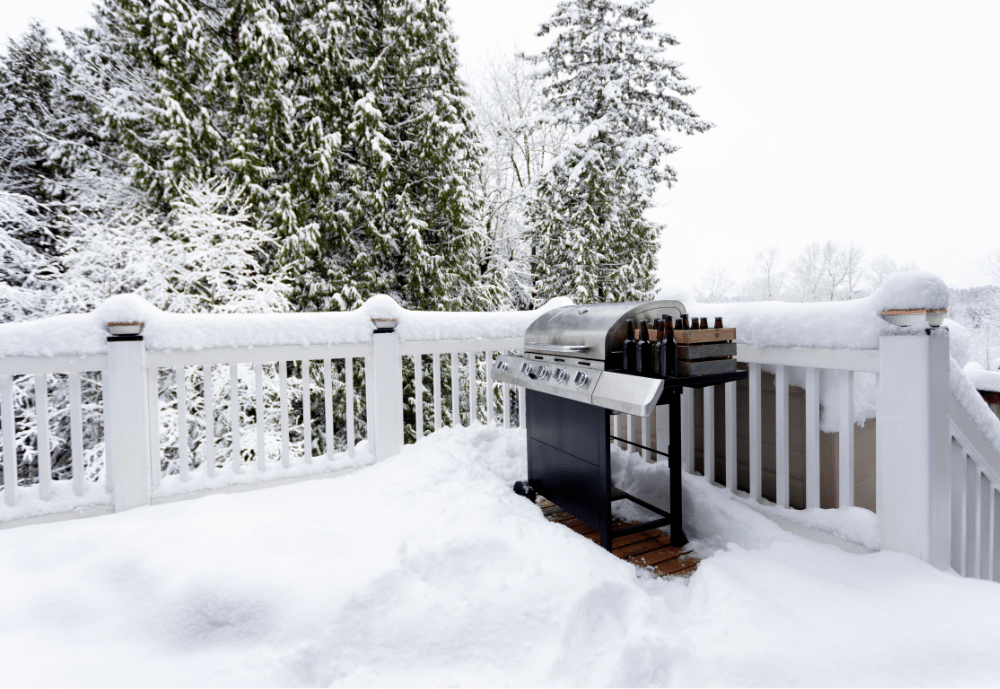
Leaving a thick blanket of snow might look pretty, but it adds serious stress to your framing.
Let’s do the math:
-
1 cubic foot of wet snow weighs up to 20 pounds.
-
A 12×16 deck (192 sq. ft) can hold nearly 3,800 pounds of snow after just 12 inches of accumulation.
That’s nearly two tons of weight pressing down — often unevenly.
Pro tip:
Use a plastic shovel or broom to remove snow before it gets heavy. Never chip ice with a metal tool (it can scratch composite boards).
Myth #4: Handrails and Posts Don’t Matter for Load Ratings
Rails and posts aren’t just for looks — they help distribute load and resist movement.
A solid deck frame needs correct post spacing, lateral bracing, and joist hangers designed to handle downward and side pressure from snow and ice.
When we inspect decks in Papillion, Elkhorn, and Millard, the most common failure points are loose connections or undersized beams — both red flags during freeze-thaw cycles.
Myth #5: Only Elevated Decks Need to Worry About Snow Load
Ground-level decks can also suffer from heaving, water pooling, and frost damage when snow melts and refreezes around footings.
We use helical piers or deep concrete footings that extend below the frost line (about 42” in Nebraska). This prevents shifting or cracking even during extreme winters.
Bonus Tip: When to Schedule a Deck Inspection
If your deck is more than a decade old — or you’ve noticed sagging, creaking, or separation at the posts — it’s smart to get a professional inspection before winter.
Our team at Decks, Decks & More Decks checks:
-
Beam and joist sizing against snow load code
-
Ledger attachment to your home
-
Railing stability and post condition
-
Fastener corrosion or loose connections
We’ll give you an honest assessment and clear recommendations, whether it needs a tune-up, reinforcement, or full rebuild.
Final Thoughts
Snow load isn’t something to gamble with. The right materials and framing make the difference between a safe, sturdy deck — and one that gives under pressure.
With more than 45 years of experience building decks across Nebraska, Decks, Decks & More Decks ensures every project meets or exceeds state code.
Call (402) 690-1050 or visit our Papillion showroom to schedule your winter deck inspection today.