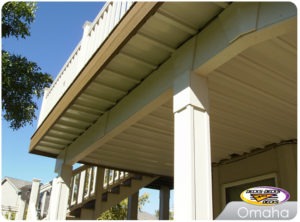
The Rise of Low-Maintenance Decking in 2026

The Rise of Low-Maintenance Decking in 2026

Deck ownership in 2026 looks very different than it did even a few years ago. Homeowners aren’t looking for weekend projects—they’re looking for outdoor spaces that stay attractive without constant upkeep. That shift has pushed low-maintenance decking from a luxury upgrade to a standard expectation.

Here’s why low-maintenance decks are dominating in 2026 and why the trend shows no signs of slowing down.


1. Time Has Become the Most Valuable Feature

Modern homeowners are busier than ever. In 2026, the appeal of a deck isn’t how often it can be refinished—it’s how rarely it needs attention.

Low-maintenance decking eliminates:

  • Annual staining and sealing

  • Splintering and surface cracking

  • Rot and moisture-related repairs

Instead of maintaining a deck, homeowners get to enjoy it.
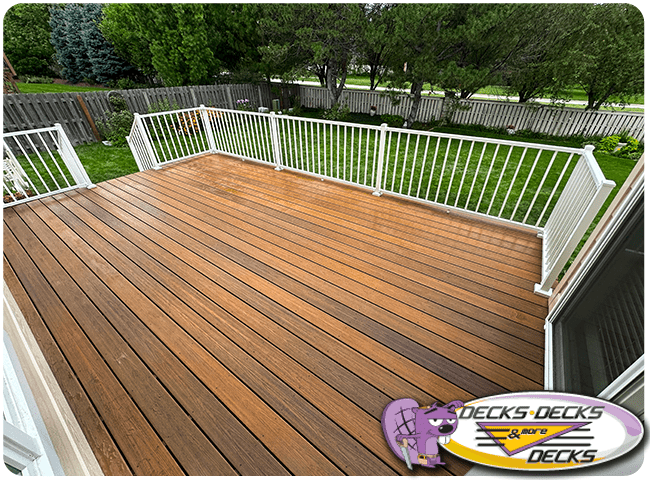
Composite deck installation featuring durable, low-maintenance materials.


2. Materials Built for Long-Term Performance

Advancements in composite and capped decking materials have reshaped expectations. These products are engineered to withstand weather extremes while maintaining consistent color and texture.

In 2026, low-maintenance decking means:

  • Resistance to fading and moisture

  • Stable boards that don’t warp easily

  • Surfaces designed for durability and comfort

Performance now comes standard—not as an upgrade.


3. Cleaner Design With Fewer Visual Issues

Low-maintenance materials hold their appearance better over time. That consistency plays directly into modern deck design trends that favor clean lines and uniform finishes.

Homeowners appreciate:

  • Even spacing and alignment

  • Reduced surface wear

  • A deck that looks intentional, not weathered

The result is a deck that still looks new years after installation.
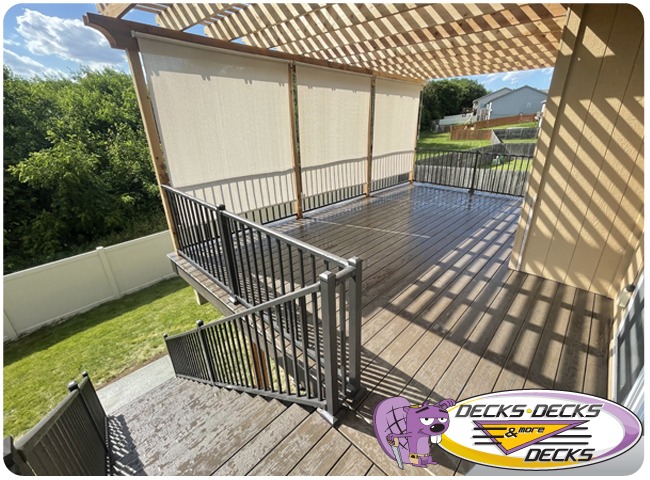
Composite deck built for durability and low maintenance.


4. Lower Ownership Costs Over Time

While low-maintenance decking may cost more upfront, the long-term financial picture in 2026 is clear.

Homeowners save by avoiding:

  • Repeated staining and sealing costs

  • Board replacements due to rot or cracking

  • Labor expenses tied to frequent upkeep

What starts as a material decision quickly becomes a financial one.


5. Designed for Real Life, Not Just Looks

Decks in 2026 are built to handle daily use—kids, pets, gatherings, and weather—without constant concern.

Low-maintenance decking supports:

  • Easy cleaning after heavy use

  • Safer, splinter-free surfaces

  • Confidence that the deck will hold up season after season

Functionality matters just as much as appearance.
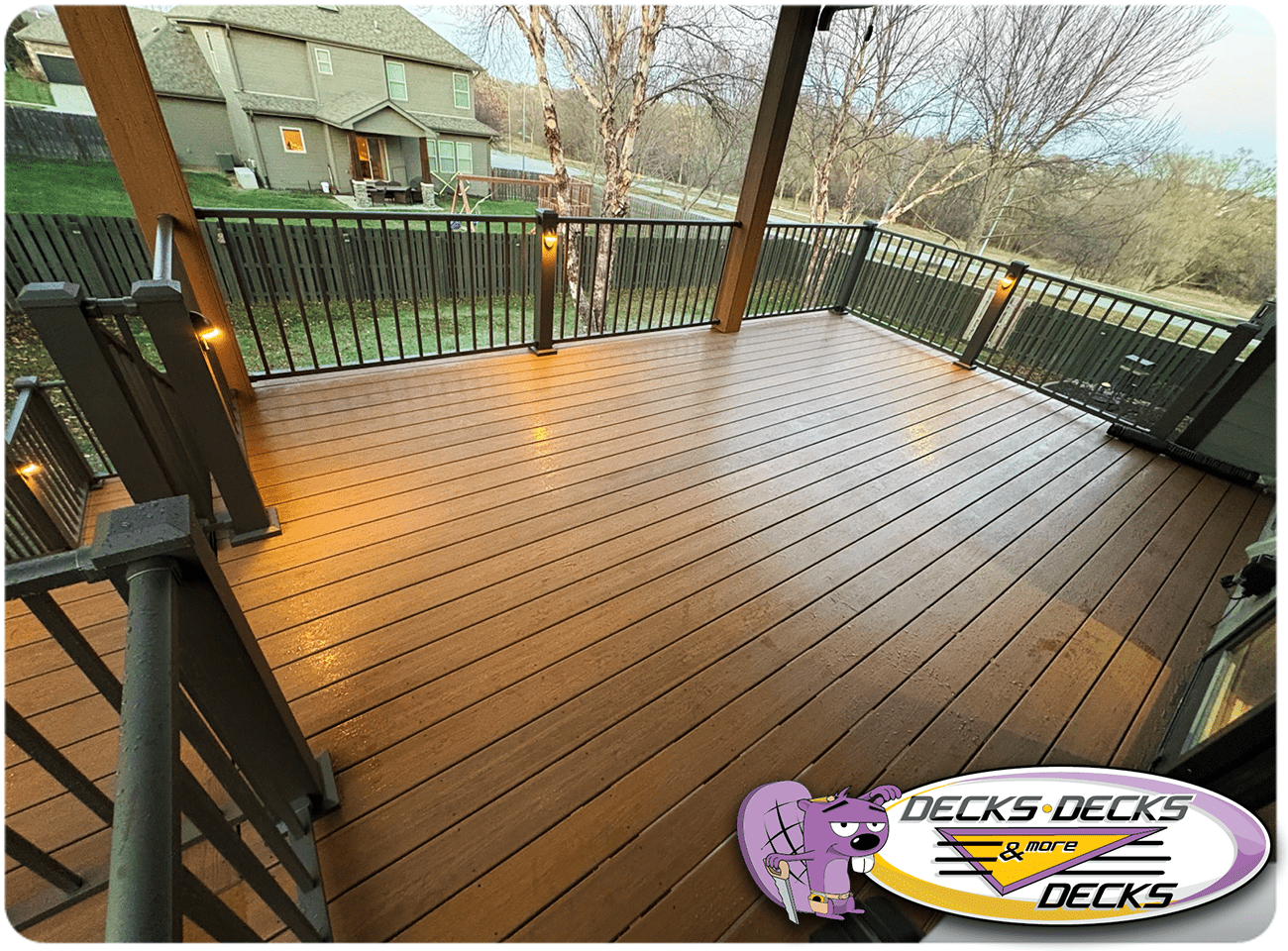
Low-maintenance backyard composite deck built with durable materials.


Final Thought

The rise of low-maintenance decking in 2026 reflects a bigger shift in how homeowners view outdoor living. Decks are no longer projects to maintain—they’re spaces meant to be used. With durable materials, cleaner design, and reduced upkeep, low-maintenance decking has become the new standard.
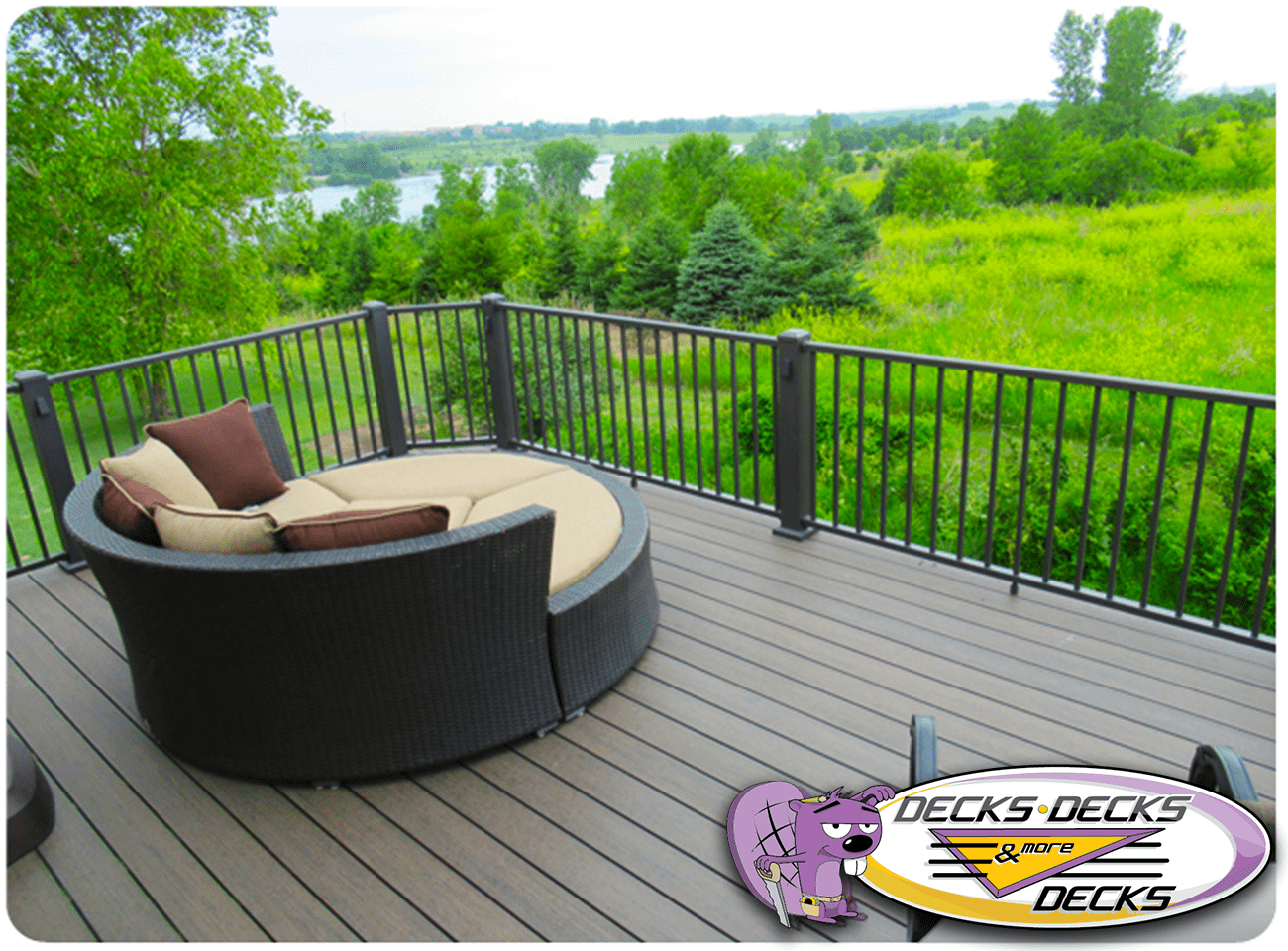

The Science of Deck Materials: How Heat, UV, and Moisture Break Things Down

The Science of Deck Materials: How Heat, UV, and Moisture Break Things Down

Decks are meant to live outside—but nature doesn’t always play nice. From blazing sun to freezing rain, the elements are constantly working to break your deck down.

What most people don’t realize is that different materials react very differently to environmental stress. Understanding a bit of the science behind it can help you choose decking that actually lasts—and avoids the warping, fading, and rot that can wreck your investment.


UV Rays: The Color Killers

Let’s start with the sun. Ultraviolet (UV) radiation from sunlight breaks down lignin, a key structural compound in wood. Over time, this leads to:

  • Fading: Wood loses its rich tone and turns gray or dull
  • Surface breakdown: Fibers become dry and brittle
  • Splintering: Especially in softer woods like cedar or pine

Composite materials often include UV inhibitors that resist fading and surface breakdown. And capped composites (with a protective outer shell) are even more effective—they’re like sunscreen for your deck boards.


Heat: The Warper and Weakener

Heat alone won’t always destroy your deck—but combined with UV and moisture, it accelerates the breakdown process.

Wood decks:

  • Expand and contract as temperatures fluctuate
  • Warping and cupping can happen if boards are not properly spaced
  • Paint or stain may blister or peel in high heat

Composite decking:

  • Can get hot to the touch in dark colors, but resists structural changes
  • Premium lines (like Deckorators Voyage or Trex Transcend) use heat-reflective technology to reduce surface temperature

Metal railings or accents:

  • Can absorb and retain a lot of heat
  • Powder-coated finishes help reduce thermal stress

Moisture: The Real Silent Killer

Water is your deck’s worst enemy—especially if you’re using wood.

What water does to wood:

  • Encourages fungal growth (hello, rot and mildew)
  • Causes swelling, followed by shrinking when it dries—leading to cracks
  • Soaks into screw holes, joints, and end cuts if not sealed
  • Can corrode metal fasteners over time

Composite materials:

  • Are moisture-resistant by design
  • Capped composites repel water completely
  • No rotting, warping, or splintering—just the occasional rinse

Pro tip: If you’re using pressure-treated wood, seal it annually. If you’re going composite, you can skip that step—and thank yourself later.


Freeze-Thaw Cycles: Nature’s Expansion Pack

If you live in a place where winter brings freezing temps, your deck deals with expansion and contraction on repeat. Moisture gets into cracks or gaps, freezes, expands, and—boom—your boards or railings start to degrade.

Wood decks:

  • Are especially vulnerable without regular sealing
  • Nails and screws can loosen as wood swells and shrinks

Composite decks:

  • Maintain a more consistent shape

What Science Says to Use

If you want a deck that survives nature’s abuse for the next 20+ years with minimal upkeep, go with:

  • Capped composite decking
  • Stainless steel or coated fasteners
  • Powder-coated aluminum or composite railings

Add a solid drainage system (especially for second-story decks), and you’re looking at long-term resilience, not seasonal repair work.


Final Thoughts: Nature Doesn’t Play Fair—But You Can Play Smart

Heat, sunlight, and moisture are relentless. They’ll eat away at any material not built to handle them. But with the right science-backed choices—especially in materials—you can build a deck that not only survives the elements, but thrives in them.

Choose wisely now, and you won’t be replacing boards or restaining every year. You’ll just be enjoying your outdoor space, season after season, decade after decade.

Trusted Omaha TimberTech Decking Provider

TimberTech logo for Omaha TimberTech Contractor

Decks, Decks, and More Decks is dedicated to providing excellent service, design, and materials to its Omaha customers. Deciding to build a custom deck onto an Omaha home is an investment; deciding on the team and materials is crucial for the long-term value and appeal it’ll provide a home.

Our Omaha custom deck team has built thousands of decks across the Omaha-metro. And one strong asset our custom deck company provides is its trusted decking material and manufacturers. Decks, Decks, and More Deck is a trusted provider is TimberTech decking material – composite decking and railing. Composite decking is low maintenance and never needs to be stained or sanded. Its durability is proven, as it resists mold, mildew scratches, stains, and damage from termites and rot.

Timber Tech also provides an industry-leading 30-year Fade & Stain Warranty. Unlike cedar decks, Decks, Decks and More Decks’ low-maintenance custom decks built with TimberTech decking won’t fade. They also provide added beauty to our Omaha custom decks with wood-graining texture and a variety of color options.

As a trusted TimberTech contractor, Decks, Decks, and More Decks is confident in its craftsmanship and materials for custom decking. Give us a call today for a free consultation!

Enhancing Custom Decks with Drainage Systems

Custom deck building is comprised of many components. From the materials to the design to the aesthetics, our Omaha custom decking company builds decks that are durable and beautiful. Part of a deck’s durability and aesthetic appeal is related to deck drainage.

Deck drainage systems are ideal for raised decks for two main reasons. First, they deflect water by custom deck drainagecollecting it and driving it away from the home and foundation. Allowing airflow and ventilation is vital to the life of your home’s structure and the deck. In addition, deck drainage systems will provide your Omaha home with more usable living space below the custom-raised deck. It’s attractive, and durable, and will help brighten the space below the deck – making it more usable and enjoyable.
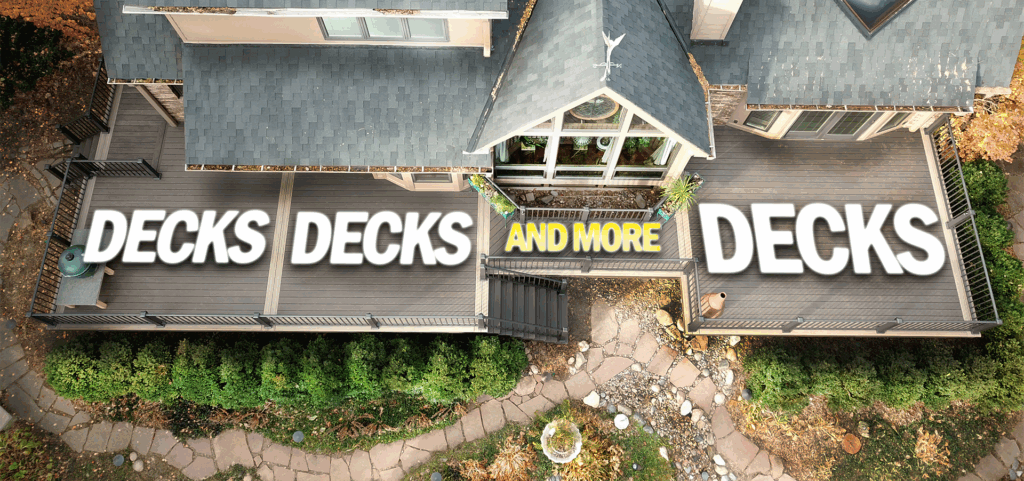
At Decks, Decks, and More Decks all our custom decks are built to the specific needs of your family, while taking into account safety, longevity, and beauty. A deck drainage system will only add to the function and beauty of your custom deck.